
How to Build an On-Demand Delivery App in 2026: A Complete Development Guide
An on-demand delivery app looks like one product from the outside. Underneath, it's three coordinated applications and a real-time matching system — here's the architecture, the must-have features, and a realistic build timeline.

The Three Apps Inside Every Delivery Platform
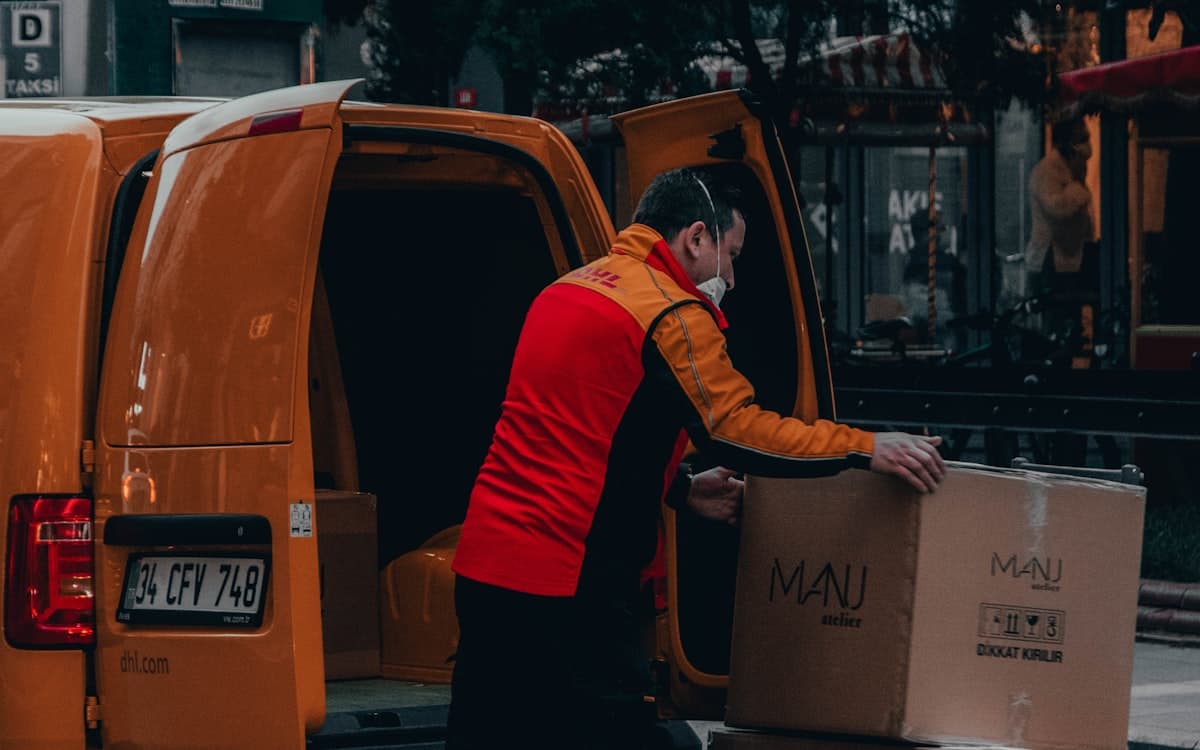
Every on-demand delivery product, regardless of what it delivers, is really three coordinated applications built on one shared backend. The customer app handles browsing, ordering, tracking, and payment. The courier or driver app handles accepting jobs, navigation, and status updates. The admin and dispatch dashboard handles order monitoring, manual intervention when something goes wrong, and the operational reporting the business runs on.
Teams that plan for "an app" instead of these three coordinated surfaces routinely underscope the project — the courier app and the dispatch dashboard are just as much a part of the build as the customer-facing app, and skipping proper planning for either is one of the most common reasons delivery app projects go over budget and over timeline.
Core Features Customers Actually Expect
By now, users have a baseline expectation set by every major delivery platform they've already used, and falling short of it reads as broken rather than minimal. Real-time order tracking with a live map and an accurate, continuously updating ETA is table stakes, not a nice-to-have. In-app payment with saved methods, transparent pricing shown before checkout, and a clear order history are all expected as standard, not advanced features.
Push notifications at each meaningful status change — order confirmed, courier assigned, out for delivery, arriving — keep the customer informed without them needing to open the app and check. A simple, low-friction rating and feedback flow after each delivery closes the loop and feeds the quality signals the platform needs to manage courier performance over time.

The Architecture Underneath: Matching, Routing, and Real-Time Sync
The matching engine — deciding which available courier gets offered which order — is the technical core of the whole system, and it needs to balance several factors at once: proximity, courier capacity, estimated delivery time, and fairness in how jobs get distributed across the available courier pool. A naive "nearest courier" algorithm works for a demo and breaks down under real load and real geography.
Real-time location sync between the courier app, the customer's live map, and the dispatch dashboard requires a persistent connection architecture — typically WebSockets or a similar push-based system — rather than the client repeatedly polling for updates, which doesn't scale and introduces noticeable lag. The notification pipeline needs to be reliable enough that a courier assignment or a status change reaches the right app within seconds, consistently, because a five-minute-late notification in a delivery app isn't a minor bug, it's a broken core experience.
Payments, Payouts, and Trust & Safety
Payments in a delivery platform typically need to handle three legs: charging the customer upfront or on completion, holding funds until the delivery is confirmed, and paying out the courier — often on a schedule separate from the customer transaction. Getting this right usually means building on a payments platform designed for marketplace-style split payments rather than a simple single-merchant checkout integration.
Trust and safety work is easy to underweight in early planning and expensive to retrofit later: identity verification for couriers, basic fraud checks on unusual ordering patterns, and a clear dispute-resolution flow for missing or damaged orders all need to exist before the platform has meaningful volume, not after the first serious incident forces the issue.
A Realistic Build Timeline and Team
A focused MVP — one service area, core ordering and tracking, basic payments, manual fallback for edge cases the matching engine doesn't handle well yet — is a realistic first phase, typically requiring a small cross-functional team: mobile developers for both customer and courier apps, a backend engineer for the matching and real-time infrastructure, and a designer covering both app experiences.
Treat the initial launch as a starting point tuned for one market, not the finished product. Matching algorithm quality, courier supply, and operational tooling all improve fastest with real usage data from a contained launch, and expanding to new service areas or adding features like scheduled orders or multi-stop deliveries is far easier to do well once the core loop is proven than to build speculatively before you have real usage to learn from.
More From the Blog

Ready to Transform Your Business?
Let's build something extraordinary together. Get a free consultation and discover how Staller Stack can accelerate your digital journey.